
Every athlete knows the sinking feeling of a sudden "pop," a sharp twinge, or a lingering ache that just won’t go away. Whether you are a weekend warrior or a competitive professional, being sidelined is more than a physical inconvenience: it is a mental and emotional challenge. However, the path back to the field, court, or track isn't a race; it is a systematic process.
At Dynamic Spine and Performance Center, we see athletes rush back to play far too often, only to find themselves back in our office two weeks later with a re-aggravated injury. To help you avoid the "revolving door" of sports injuries, we have outlined the definitive five-step guide to rehabilitating your injury correctly and ensuring your return to play is both safe and permanent.
Step 1: Accurate Diagnosis and Professional Assessment
The biggest mistake an athlete can make is self-diagnosing based on a Google search. While many minor strains may feel similar, the difference between a Grade 1 and a Grade 3 tear dictates an entirely different recovery timeline.
A professional assessment is the foundation of your recovery. During this phase, a sports medicine specialist or a chiropractor specializing in performance will perform orthopedic and neurological testing. In some cases, diagnostic imaging like X-rays or MRIs are necessary to determine the structural integrity of the joint or muscle.
Why is this step non-negotiable? Because you cannot treat what you don't understand. A "knee problem" might actually be a compensation issue stemming from a hip misalignment or a lack of ankle mobility. Understanding these early warning signs of a sports injury allows for a targeted treatment plan rather than a "shotgun" approach.
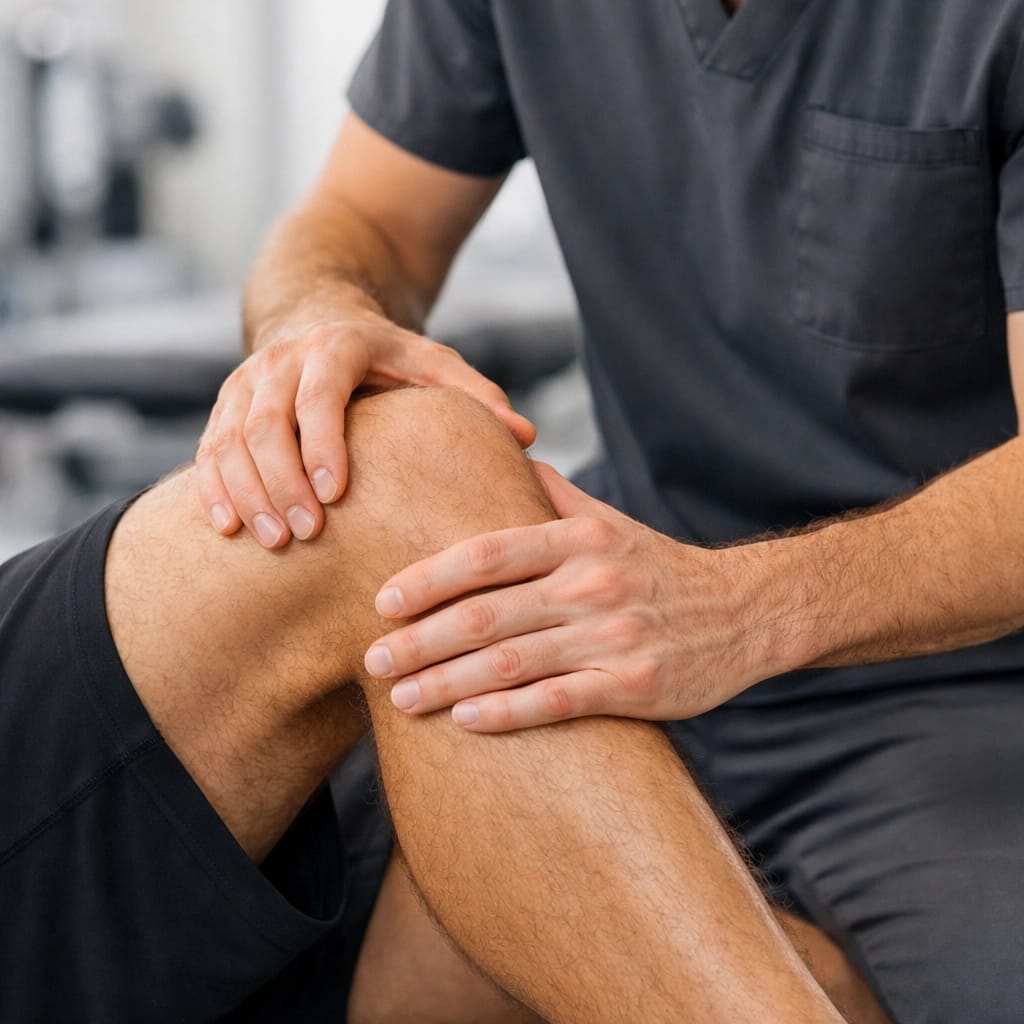
Step 2: Protection and Inflammation Management
Once the injury is identified, the immediate goal is to limit further damage. This phase typically lasts between 4 to 6 days following the acute trauma. The body’s natural inflammatory response is actually a vital part of healing, but excessive swelling can lead to secondary tissue damage and a significant loss of range of motion.
During this stage, the "RICE" method (Rest, Ice, Compression, Elevation) has traditionally been the gold standard. However, modern sports science now leans toward "POLICE" (Protection, Optimal Loading, Ice, Compression, Elevation). The key shift here is Optimal Loading. Total immobilization can lead to muscle atrophy and stiffening of the connective tissues.
If you are dealing with sports injuries that require treatment, your provider might recommend specific bracing or taping to protect the area while still allowing for very light, non-painful movement. This protection phase is about giving your biology the "green light" to start the repair process without the interference of new trauma.
Step 3: Restoring Mobility and Managing Neurological Pain
Once the initial swelling has subsided, the focus shifts to regaining what was lost: movement. This is often the most frustrating phase for athletes because while the sharp pain may be gone, the "stiffness" remains.
At Dynamic Spine and Performance Center, we utilize advanced sports therapy techniques to bridge the gap between rest and movement. One of our most effective tools during this phase is ARP Wave Therapy.

Unlike traditional TENS units that simply mask pain, the ARP Wave (Accelerated Recovery Performance) focuses on the neurological origin of the injury. Most injuries occur because the brain is not communicating correctly with the muscles, causing the joint to take a "hit" it wasn't designed for. ARP Wave Therapy helps "re-train" the nervous system to absorb force properly, which drastically speeds up the restoration of range of motion and reduces the risk of chronic compensatory patterns.
During this step, you will work on:
- Passive and Active Range of Motion: Moving the joint through its natural path without resistance.
- Flexibility: Ensuring the surrounding musculature isn't guarding or tightening.
- Joint Mobilization: Using chiropractic adjustments to ensure the skeletal system is aligned to support healthy movement.
Step 4: Building Strength and Proprioceptive Resilience
Around the 21-day mark, the body enters the "remodeling phase." The new tissue being laid down is disorganized and weak. This is where Step 4 becomes critical: you must stress the tissue to make it strong.
Rehab is not just about getting the muscle back to its original size; it is about rebuilding proprioception: your body’s ability to sense its position in space. When you sprain an ankle, the nerve endings that tell your brain where your foot is located are damaged. Without retraining these nerves, you are highly likely to roll that same ankle again the moment you hit an uneven surface.
Our approach to sports performance and chiropractic care involves a transition from general strengthening to sport-specific movements. This includes:
- Isometrics: Holding positions under tension to build foundational strength without joint stress.
- Eccentric Loading: Focus on the "lowering" phase of movements, which is where most muscle injuries occur.
- Balance and Stability: Using balance boards or single-leg drills to wake up those dormant neurological pathways.

Step 5: Gradual Return to Play and Functional Testing
The final step is the one every athlete wants to jump to on day one. However, "Return to Play" is a spectrum, not a light switch. You don't go from the training table to a full-speed game overnight.
Before you are cleared for full participation, you should be able to pass functional tests that replicate the demands of your sport. If you are a soccer player, can you cut at 70% speed without pain? If you are a pitcher, can you complete a long-toss program without a change in mechanics?
A successful sports injury therapy and rehab program concludes with a gradual exposure plan:
- Phase A: Individual drills and conditioning.
- Phase B: Limited-contact practice or non-competitive team drills.
- Phase C: Full-contact practice.
- Phase D: Game minutes with restricted playing time.
Throughout this entire process, communication between you, your coach, and your clinical team is vital. We work closely with our partners and local coaches to ensure the athlete isn't being pushed beyond their current physiological capacity.
Why a Professional Support Team Matters
Recovering from a sports injury is a complex physiological process that involves the nervous system, the skeletal system, and soft tissue. Attempting to navigate this alone often leads to "compensation injuries": where you hurt your left hip because you’ve been limping on your right knee for three weeks.
At Dynamic Spine and Performance Center, we specialize in helping athletes navigate these five steps with precision. Our goal isn't just to get you back on the field; it's to make sure you return as a more resilient, balanced, and powerful athlete than you were before the injury.

If you are currently struggling with an injury or feel like your recovery has plateaued, don't wait for it to become a chronic issue. Dr. Ford and our expert team are here to create a customized roadmap for your comeback.
From advanced chiropractic care to cutting-edge neurological rehab, we provide the tools you need to reclaim your performance. Check out our frequently asked questions or explore our common conditions treated to see how we can help you get back in the game safely.
Ready to start your recovery? Visit us at Dynamic Spine and Performance Center and let's get you back to the sport you love.
Ready to Move, Recover and Perform Better?
Schedule an individualized consultation with Dr. Stephen Ford at one of DSPC’s Greater Houston locations.
Book an Appointment