
If you are a parent of a young athlete today, you know that the landscape of youth sports has changed dramatically over the last decade. It’s no longer just about "playing for fun" on the weekends. Between travel teams, specialized skills trainers, and year-round tournament schedules, our kids are training like professionals before they even hit high school.
While this intensity can lead to incredible skill development, it also comes with a hidden cost: overuse injuries. We see it every day at Dynamic Spine and Performance Center. Young pitchers with "Little League Elbow," gymnasts with chronic back pain, and soccer players dealing with persistent knee issues.
As a parent, you want to protect your child’s future. You want them to excel today, but more importantly, you want them to have a body that functions well for the next eighty years. That is why we are talking about a "secret weapon" that is changing the game for longevity: ARP Wave Therapy.
The High Stakes of Modern Youth Sports
The trend toward early sports specialization: where a child focuses on one sport year-round: has led to a surge in injuries that used to be reserved for adults. The problem lies in the repetitive nature of these movements. When a young athlete performs the same motion thousands of times without adequate rest, their body begins to break down.
Young athletes are uniquely vulnerable because of their growth plates. These areas of developing cartilage at the ends of long bones are much weaker than the surrounding ligaments and tendons. When stress is applied repeatedly, it’s the growth plate that often gives way first. Catching these early warning signs of a sports injury is critical, but preventing the damage from becoming permanent is the ultimate goal.
Mechanical vs. Neurological: Why Foam Rolling Isn’t Enough
When a young athlete complains of soreness or "tightness," the traditional advice is often to "get on the foam roller" or "stretch it out." While these methods have their place in a general wellness routine, they are essentially mechanical fixes for a neurological problem.
Imagine your child’s body is like a high-performance car. Foam rolling is like buffing out a scratch on the paint or temporarily greasing a squeaky hinge. It addresses the surface-level tension of the muscle (the fascia). It feels good for a few minutes, but it doesn't change how the car is actually driving.
ARP Wave Therapy, on the other hand, is like a neurological reboot for the car’s computer system.
Overuse injuries happen because the brain sends a signal to a muscle to contract, but because of fatigue or previous trauma, the muscle can’t absorb the force. The brain then "shuts down" that muscle to protect it and shifts the load to another area: usually a joint or a different muscle group not designed for that task. This is called a compensation pattern. Foam rolling can’t fix a compensation pattern because the issue isn't in the muscle; it’s in the signal coming from the nervous system.

The Science: The RCHSD Pilot Study
We don’t just use ARP Wave because it "feels" effective; we use it because the clinical data supports its power, especially for the younger demographic.
A significant pilot study conducted at Rady Children's Hospital San Diego (RCHSD) looked at the impact of ARP Wave Therapy on adolescents with knee dysfunction and pain. The study compared standard physical therapy to a protocol including ARP Wave. The results were staggering: the adolescents receiving ARP Wave therapy showed significantly improved knee function and lower pain scores compared to those receiving traditional physical therapy alone.
For a parent, this is the gold standard of reassurance. It proves that by addressing the neurological origin of the pain, we can get kids back on the field faster and with more stability than traditional methods ever could.
How ARP Wave Works as a "Neurological Reboot"
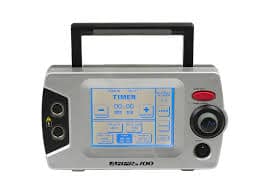
So, what actually happens during a session? ARP (Accelerated Recovery Performance) Wave uses a specific type of direct current (DC) that is harmonized with the body’s own electrical frequency.
Most electrical stimulation machines (like TENS units) use alternating current (AC) to "distract" the nerves from feeling pain or to force a muscle to twitch. ARP Wave is different. It uses the DC current to find exactly where the neurological communication has broken down.
- Finding the Short Circuit: We use the device to "scan" the athlete’s body. When the current hits a spot where the muscle isn't absorbing force correctly, the athlete feels a sensation of "intensity." That’s the "short circuit."
- Retraining the Pattern: Once we find the spot, we don't just have the athlete lie on a table. We have them perform active movements: running, jumping, or sport-specific drills: while the machine is running.
- The Reboot: This forces the brain to reconnect with that dormant muscle. It "re-boots" the neurological signal, teaching the body to absorb force in the muscles again rather than dumping that force into the joints or growth plates.
By fixing the signal, we don't just treat the symptom; we address the root cause of why the overuse injury happened in the first place. This is a core part of our approach to sports injury therapy and rehab.

Longevity and Performance: The Dual Benefit
As Dr. Ford often tells parents, the best part about ARP Wave is that it serves two masters: health and performance.
When you eliminate compensation patterns, your child becomes more efficient. When they are more efficient, they are faster, they jump higher, and they have more endurance. Because the muscles are finally doing the work they were designed to do, the joints are protected.
This is the key to youth sports longevity. We want our athletes to be just as healthy at age 25 as they were at age 15. By using ARP Wave proactively, we can identify muscle imbalances before they turn into a season-ending injury. It moves the conversation from "reactive repair" to "proactive performance."
Building a Parental Strategy for the Long Haul
ARP Wave is a "secret weapon," but it works best when integrated into a comprehensive health strategy. If you want to maximize your child’s athletic career, consider these steps:
- Monitor the Load: Watch for signs of "grumpiness" or "sluggishness." Often, a change in mood is the first sign of physical overtraining.
- Prioritize Recovery: Ensure they are getting enough sleep and proper nutrition. No amount of therapy can out-train a lack of rest.
- Diversify Movement: Even if they are specialized in one sport, encourage "play" that involves different movements (swimming, hiking, or even just tag).
- Seek Specialized Care: When they do have an ache that lasts more than two days, don't just tell them to "tough it out." This is when you should look into sports performance chiropractic care.
Is ARP Wave Right for Your Child?
If your child is currently dealing with a sports injury that requires treatment, or if you simply want to ensure their body is functioning at its highest neurological potential to prevent future issues, ARP Wave is the answer.
We know how much you invest in your child’s sports: the time, the travel, the equipment. But the most important investment you can make is in their physical foundation. At Dynamic Spine and Performance Center, we are dedicated to helping young athletes stay in the game they love, for as long as they want to play it.
Don't let an overuse injury sideline your child’s dreams or impact their long-term health. Experience the difference that a neurological approach can make.
Ready to give your athlete the secret weapon they deserve?
Contact us today to schedule an assessment and see how ARP Wave Therapy can protect your child's future.
Ready to Move, Recover and Perform Better?
Schedule an individualized consultation with Dr. Stephen Ford at one of DSPC’s Greater Houston locations.
Book an Appointment