
When you pull a muscle, sprain an ankle, or feel that sharp twinge in your shoulder after a heavy lift, your first thought is usually about the “hardware.” You think about the torn fibers, the swelling, and the physical damage to your tissues. You rest, you ice, and you wait for the “meat” of your body to stitch itself back together.
But what if I told you that the most important part of your recovery isn’t happening in your muscles at all? It’s happening in your brain.
At Dynamic Spine & Performance Center, we don’t just look at where it hurts; we look at why your body is moving that way in the first place. The secret to getting back on the field, the court, or the platform faster isn’t just healing the tissue: it’s rewiring the nervous system. This process is called neuroplasticity, and it is the ultimate “cheat code” for elite recovery and performance.
What is Neuroplasticity?
For a long time, scientists thought the brain was like a piece of hard-wired machinery. They believed that once you reached adulthood, your brain was “set in its ways” and couldn’t really change. We now know that isn’t true.
Neuroplasticity is the brain’s ability to reorganize itself by forming new neural connections throughout life. Think of your brain like a high-tech GPS system. If a road is blocked (by an injury), your brain can find a “detour” to get the signal where it needs to go. It can strengthen existing paths or build entirely new ones.
This principle is the foundation of how we learn everything, from walking as a toddler to perfecting a back-squat as an athlete. In the context of sports injury therapy and rehab, neuroplasticity allows us to develop better, faster, and more efficient posture and functional movement patterns.
The Injury “Software” Problem
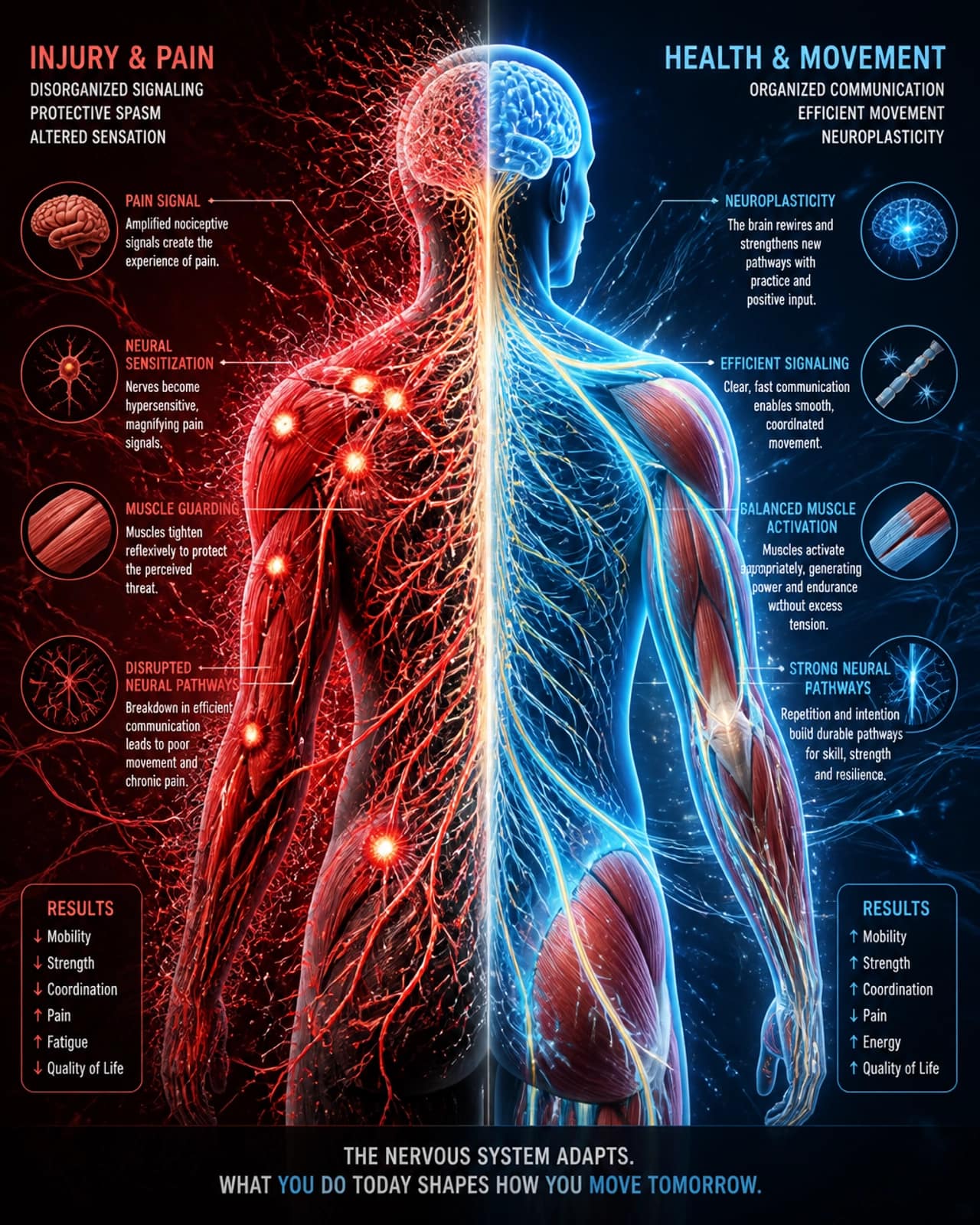
When you suffer a soft tissue injury: like a strain or a sprain: your brain goes into “protection mode.” It creates a movement pattern called “guarding.” To protect the injured area, your brain will literally shut down certain muscles and overwork others to keep you moving.
This is a great short-term survival strategy, but it’s a terrible long-term performance strategy.
Even after the physical tissue has “healed,” the brain often keeps the “software” running on that old, protective program. You might still favor one leg when you run, or your shoulder might stay slightly hunched to protect a rotator cuff injury that happened months ago. This leads to:
- Compensatory movements: Other parts of your body take the load they aren’t designed for.
- Chronic pain: The brain stays “hyper-aware” of the area, even when the damage is gone.
- Decreased performance: You lose power, speed, and efficiency because your “wiring” is messy.
To truly heal, you have to “delete” the old, faulty software and install a new, high-performance update.
ARP Wave Therapy: The Accelerator for Rewiring
This is where things get exciting. At Dynamic Spine & Performance Center, we use advanced tools like ARP Wave Therapy to speed up this rewiring process.
Standard physical therapy often focuses on the “hardware” (stretching and strengthening the muscle). ARP Wave (Accelerated Recovery Performance) focuses on the “software” (the neurological signal).
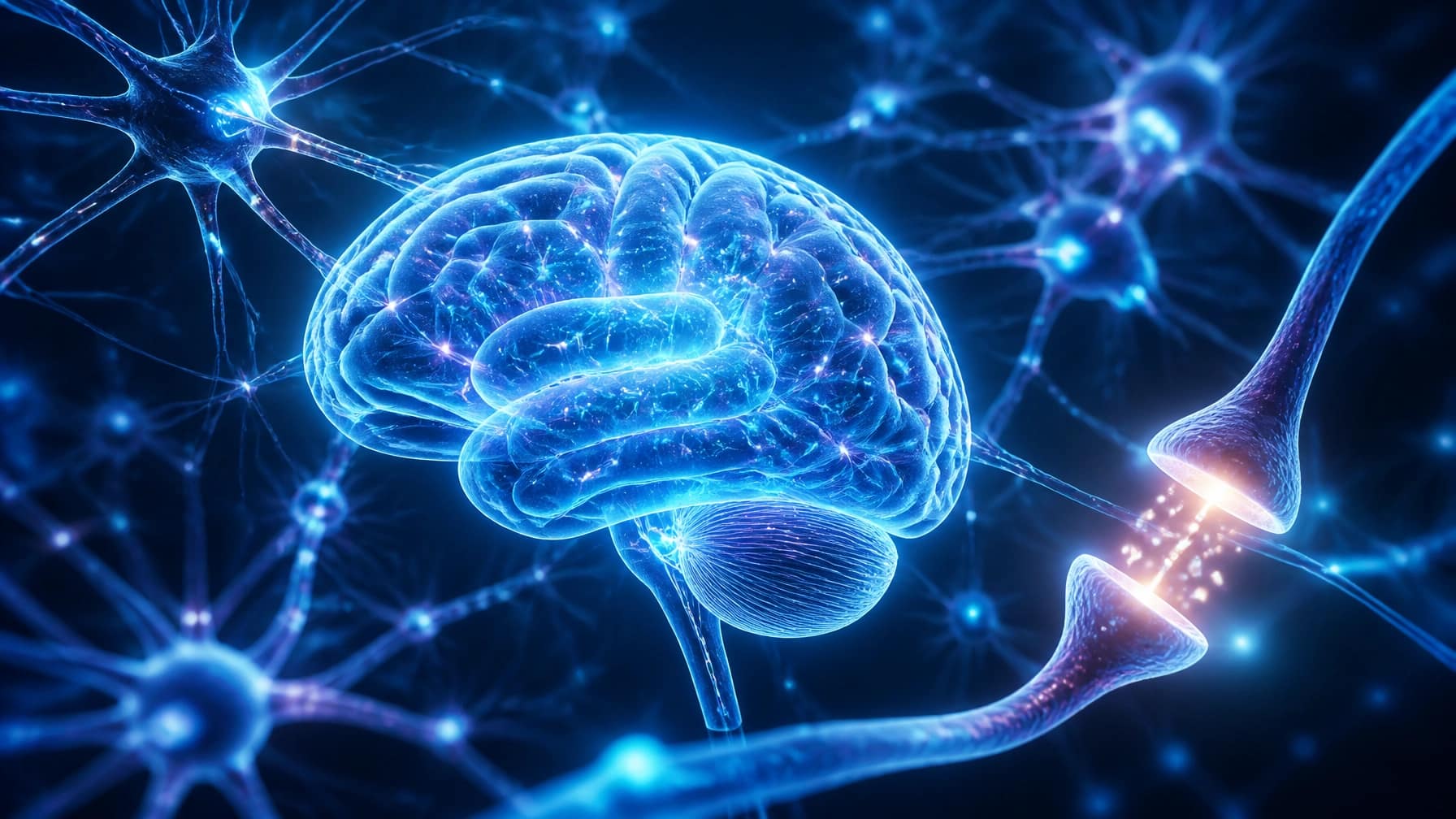
The ARP Wave device acts like a GPS for your nervous system. It sends a specific electrical signal into the body that helps us find exactly where the neurological “disconnect” is located. Most of the time, where you feel the pain is not where the problem started. The pain is just the symptom; the neurological misfire is the cause.
By using the ARP Wave during functional movements, we can force the brain to “re-learn” how to use the muscles correctly. We are essentially doing 10,000 repetitions of a “correct” movement signal in just a few minutes. This is neuromuscular re-education at its finest. It allows patients to develop better posture and functional movement much faster than traditional methods alone.
Building Better Posture and Efficiency
Posture isn’t just about “sitting up straight.” It is a dynamic, neurological state. Your posture is a reflection of how your brain perceives gravity and how it chooses to stabilize your skeleton.
When we use the principles of neuroplasticity in our chiropractic adjustments and rehab plans, we are helping your brain find its “center” again. By clearing interference in the nervous system and retraining the muscles through functional movement, your body naturally adopts a more efficient posture.
Why does efficiency matter?
- Less Effort: An efficient body uses less energy to move. This means you have more “gas in the tank” for your sport or your workday.
- Less Wear and Tear: When your “wiring” is correct, your joints are stacked properly. This prevents the grinding and inflammation that leads to long-term issues like arthritis.
- More Power: A brain that can fully recruit every muscle fiber without “guarding” or “interference” is a brain that can produce massive amounts of force.
The “Expert Coach” Approach to Rehab
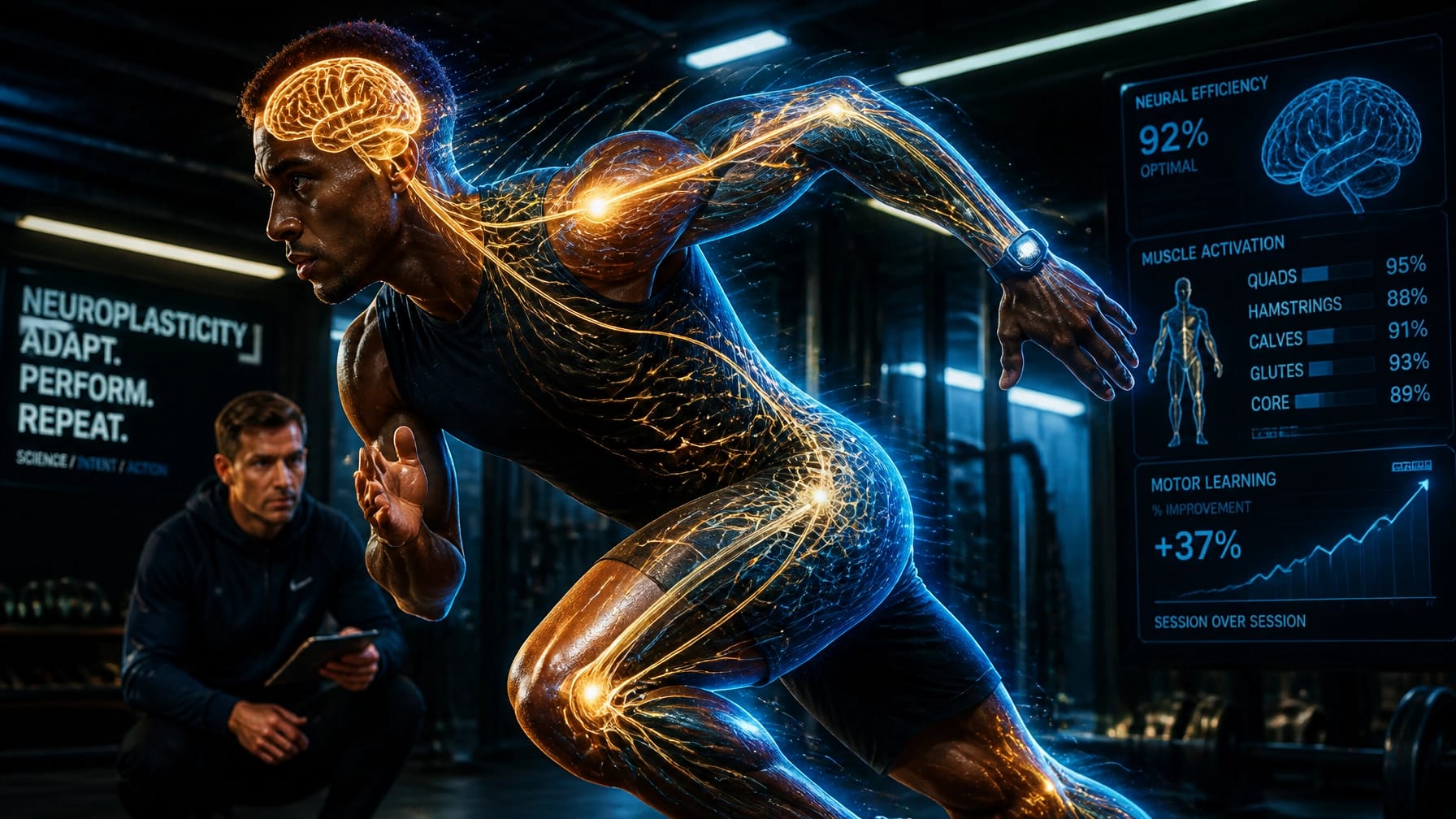
At our clinic in Houston and Katy, Texas, we don’t just “crack” backs and send you on your way. We take an Expert Coach approach. We treat you like the athlete you are: whether you’re an elite pro, a weekend warrior, or someone who just wants to play with their grandkids without pain.
Our process involves:
- Functional Assessment: Seeing how your “software” actually runs during movement.
- Neurological Reset: Using ARP Wave and chiropractic adjustments to clear the “glitches” in your system.
- Purposeful Repetition: Giving you the exact exercises needed to wire in new, better habits.
Neuroplasticity proves that you are not stuck with your old injuries. Your brain is capable of change. Your body is capable of better movement. You just need the right input.
How You Can Start “Rewiring” Today
While professional guidance from a doctor like Dr. Ford is the fastest way to see results, you can start applying these principles right now:
- Move with Intention: Don’t just go through the motions in the gym. Focus intensely on the muscle you are working. This “mind-muscle connection” is a form of neuroplasticity.
- Consistency is King: The brain needs frequent, quality signals to create a new pathway. Doing 10 minutes of mobility work every day is far more effective for your brain than doing 70 minutes once a week.
- Challenge Your Balance: Simple balance drills force your brain to create new neural maps of your body in space (proprioception).
- Don’t Ignore the “Small” Pain: Small “glitches” in your movement today become major “crashes” (injuries) tomorrow. Address them early.
Conclusion
Injury recovery is about more than just the passage of time. It is about the quality of the signals you send to your brain while you heal. By leveraging neuroplasticity and tools like ARP Wave Therapy, we can help you not just return to your “pre-injury” state, but actually become better than you were before.
Stop waiting for your tissues to just “heal” and start training your brain to lead the way.
Ready to Move, Recover and Perform Better?
Schedule an individualized consultation with Dr. Stephen Ford at one of DSPC’s Greater Houston locations.
Book an Appointment