
You’ve done the rest. You’ve done the ice. You might have even done months of physical therapy, dutifully performing your straight-leg raises and clamshells. For a while, things felt better. But then, you went for a run, jumped into a pickup basketball game, or simply tried to walk down a flight of stairs, and there it was again: that familiar, sharp ache in the front of your knee.
If you feel like your knee pain is a "revolving door" that never quite stays shut, you aren't alone. At Dynamic Spine and Performance Center, we see athletes and active adults every day who are frustrated because their recovery has plateaued. Usually, the missing piece of the puzzle isn't that the knee hasn't "healed" from the initial injury; it’s that the brain has effectively "turned off" the most important protector of the knee: the quadriceps.
This phenomenon is known as Arthrogenic Muscle Inhibition (AMI), and until you address the neurological "glitch" keeping your quads from firing, your knee pain will keep coming back.
What is Quad Inhibition (AMI) and Why Does It Happen?
Have you ever wondered why your thigh looks smaller after a knee injury, even if you’ve been trying to work out? That isn't just "laziness" or a lack of protein. It is a protective neurological reflex.
When a knee joint is damaged, swollen, or even just slightly inflamed, the sensory receptors inside the joint send "danger" signals to the brain. In response, the nervous system reflexively inhibits: or shuts down: the neural drive to the quadriceps. Think of it like a dimmer switch being turned nearly all the way down. Your brain is trying to protect the knee by preventing the quad from pulling on the joint, which might cause more pain or damage.
The problem? While this reflex is helpful in the first 48 hours of an acute injury, it often doesn't "reset" on its own. Research into early warning signs of a sports injury shows that if this inhibition persists, the muscle stays weak regardless of how many reps you do in the gym. You can’t strengthen a muscle that your brain won't allow you to access.
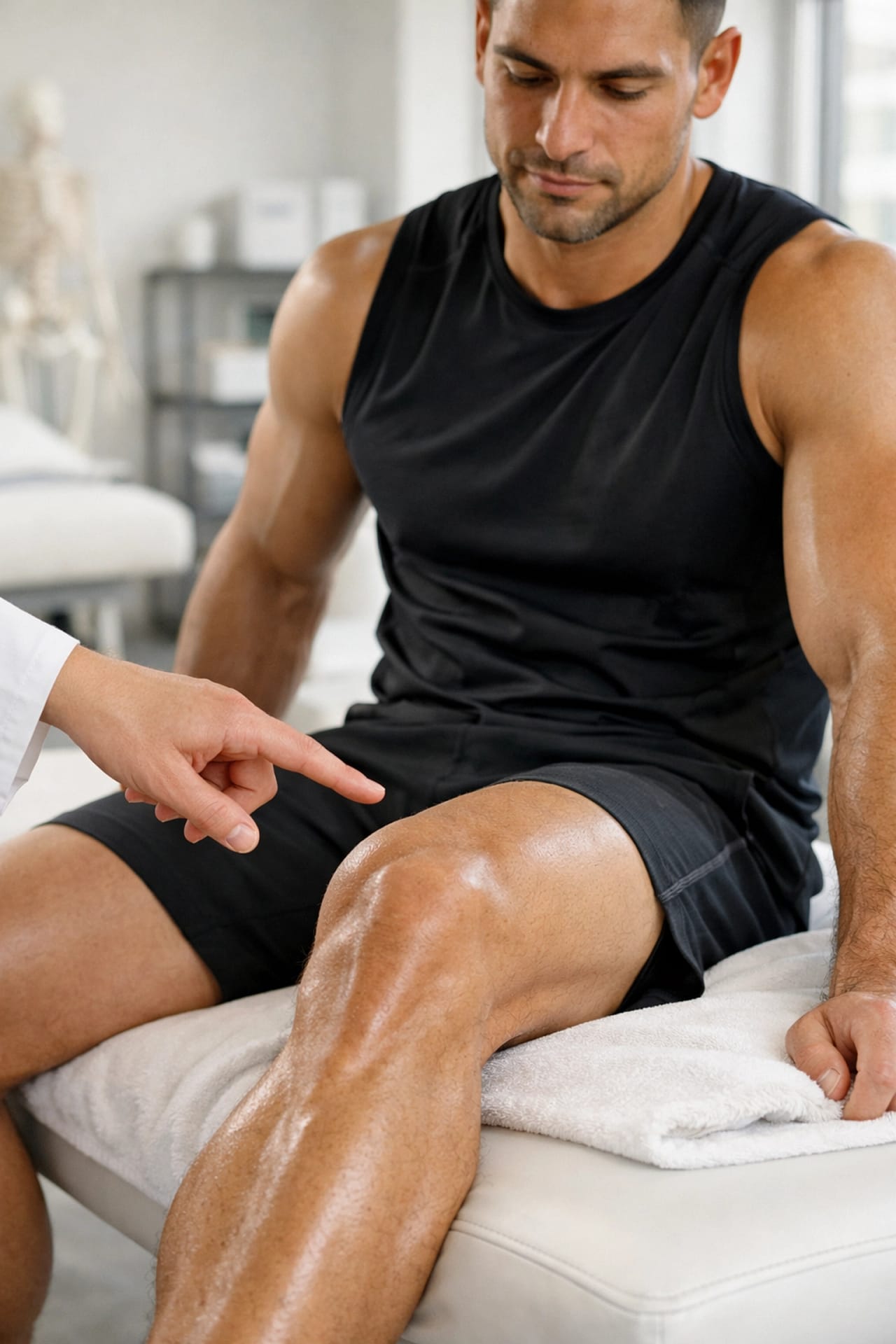
The Vicious Cycle: How Weak Quads Destroy Your Knees
The quadriceps aren't just for looking good in shorts; they are your knee’s primary shock absorbers. Specifically, they work "eccentrically" (lengthening under tension) to cushion the joint every time your foot hits the ground during walking, running, or jumping.
When you suffer from quad inhibition:
- Increased Joint Loading: Because the muscle isn't absorbing the impact, that force goes directly into the bone, cartilage, and ligaments of the knee.
- Accelerated Wear and Tear: This increased loading initiates or accelerates the breakdown of the joint surface, leading to early-onset osteoarthritis.
- Compensatory Pain: Your body will try to find other ways to move, leading to hip pain, lower back issues, or even problems in the opposite leg.
- Recurring "Flare-ups": You feel okay for a few days of light activity, but as soon as the intensity increases, the joint gets inflamed again, the brain shuts the quad down even further, and the cycle repeats.
If you’ve been stuck in this loop, it’s time to stop looking at the knee as just a collection of bones and ligaments and start looking at the communication line between your brain and your muscles.
Why Traditional Physical Therapy Often Falls Short
Standard rehabilitation often focuses on the "what" (the weak muscle) rather than the "why" (the neurological inhibition). If you have AMI, traditional exercises like leg extensions or squats can actually be counterproductive. Your body is a master of compensation; if your quad isn't firing, your glutes, calves, or back will take over to complete the movement. You might think you're getting stronger, but you're actually just getting better at "cheating" around the inhibited muscle.
To truly fix the issue, we have to "reboot" the system. We need to tell the brain that the joint is safe and that it's time to turn the "dimmer switch" back up. That is where ARP Wave Therapy comes in.
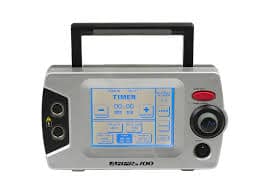
How ARP Wave Therapy "Reboots" Your Connection
At Dynamic Spine and Performance Center, we utilize the ARP (Accelerated Recovery Performance) Wave system to bridge the gap between injury and high-level performance. Unlike a standard TENS unit (which just numbs pain) or a traditional EMS unit (which uses a "slow" current to cause muscle contractions), the ARP Wave uses a patented bio-electrical current that matches the frequency of your body's own neurological signals.
Here is how it fixes quad inhibition:
1. Finding the "Hot Spot"
Most knee pain is actually "perceived" pain: the knee hurts, but the cause is often somewhere else in the kinetic chain. We use the ARP Wave to "scan" your body. Because the current is high-frequency, it will identify exactly where the neurological "short circuit" is. When the electrode hits an area where the muscle isn't absorbing force correctly, you'll feel it. This allows us to treat the source, not just the symptom.
2. Eliminating the Compensatory Patterns
Once we find the inhibited area, we perform active movements while the machine is running. This forces the brain to "see" the muscle again. By performing functional movements while the ARP Wave is stimulating the quad, we break down the old, protective movement patterns and replace them with healthy, efficient ones.
3. Rapid Strength Gains
Because the ARP Wave allows for thousands of "neurological contractions" per minute without the joint stress of heavy lifting, we can build muscle and restore neurological drive much faster than through traditional exercise alone. This is a staple of our sports injury therapy and rehab protocols.
Is Quad Inhibition Keeping You Off the Field?
How do you know if your knee pain is a quad inhibition problem? Look for these signs:
- The "Giving Way" Sensation: Does your knee ever feel unstable or like it might buckle, even though you didn't trip?
- Visible Atrophy: Is your "bad" thigh noticeably smaller or softer than your "good" one?
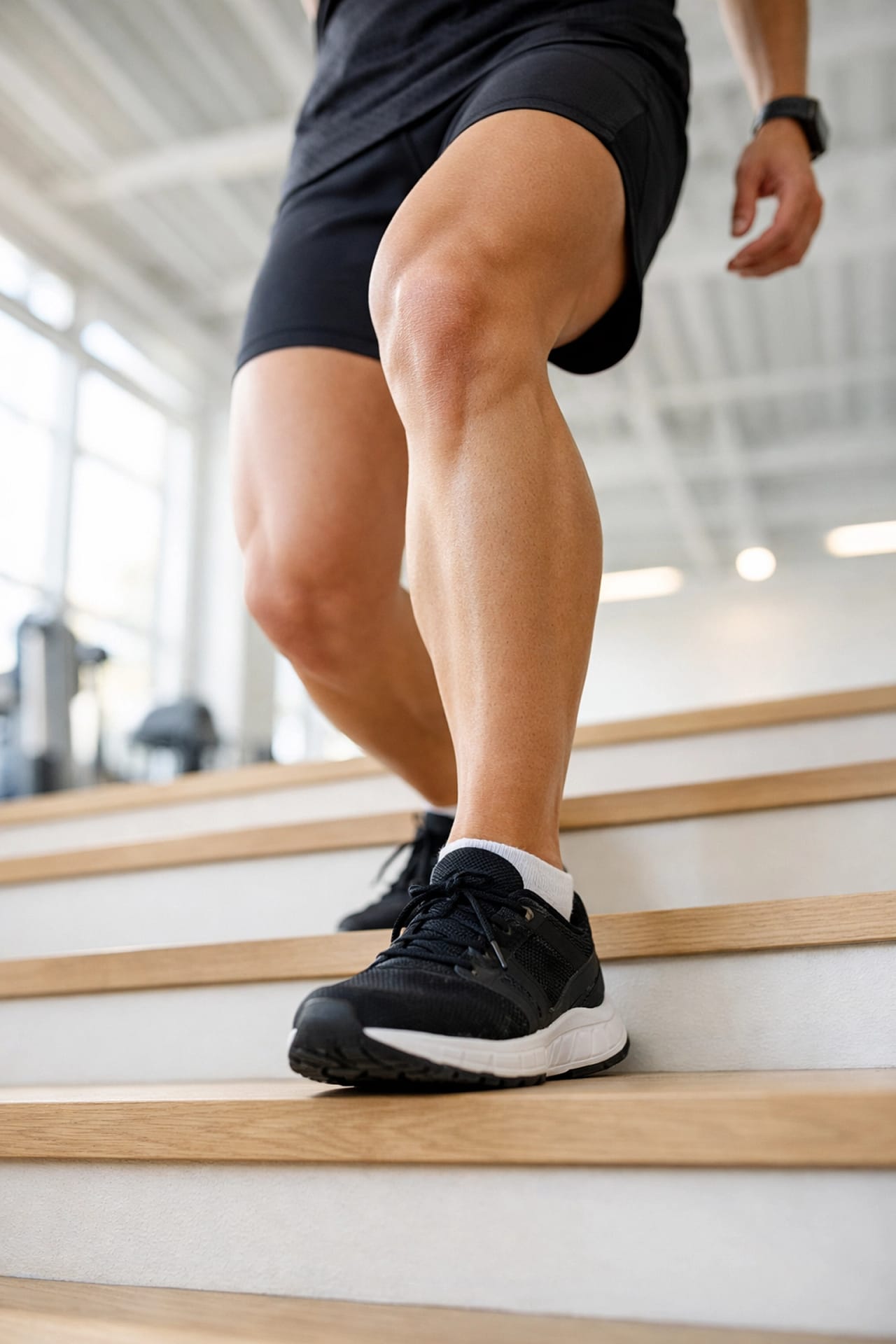
- Pain with Stairs: Do you find yourself dreading going downstairs more than going up?
- Stiffness After Rest: Does the knee feel like it "rusts" shut after sitting for 30 minutes?
If you answered yes to any of these, your nervous system is likely still in "protection mode."
A Holistic Approach to Performance
While the ARP Wave is a game-changer, it is just one part of the sports performance chiropractic approach at our clinic. True recovery requires looking at the whole person.
Sometimes, quad inhibition is exacerbated by a pelvis that is out of alignment or a lower back that isn't communicating clearly with the legs. By combining chiropractic adjustments with advanced neurological therapy, we ensure that the structural, mechanical, and neurological systems are all working in harmony.

Stop Managing Pain and Start Solving It
The most common mistake we see is waiting for the pain to "just go away." Pain is a signal, and recurring pain is a signal that something in the system is broken. Whether you are dealing with common conditions like Patellofemoral Pain Syndrome, "Jumper's Knee," or post-surgical weakness, the goal is the same: restore the connection.
At Dynamic Spine and Performance Center, led by Dr. Stephen Ford, we specialize in helping athletes get back to their peak performance by identifying these hidden neurological blocks. We don't want to see you every week for the rest of your life; we want to fix the problem so you can get back to doing what you love.

Ready to Turn the Lights Back On?
If you’re tired of the "two steps forward, one step back" nature of your knee recovery, it’s time to try a different approach. You can learn more about our payment options and investment for your health or check out our FAQs to see how we handle various athletic injuries.
Don't let quad inhibition dictate your activity level for another season. Let’s find the "glitch," reboot the system, and get you back in the game.
Ready to Move, Recover and Perform Better?
Schedule an individualized consultation with Dr. Stephen Ford at one of DSPC’s Greater Houston locations.
Book an Appointment