
You felt it the moment it happened. That pop, that twinge, that sudden sharp pain that made you stop mid-stride. Now you're standing there wondering: "Should I push through? Ice it and hope for the best? Wait to see if it gets better?"
Here's the truth: what you do in the next 24-72 hours can make the difference between a two-week recovery and a three-month nightmare. Most athletes waste precious time doing the wrong things: or worse, doing nothing at all: while their injury gets progressively harder to treat.
Let's walk through exactly what you need to do, step by step, to give yourself the best shot at a fast, complete recovery.
The First 24 Hours: Stop, Assess, and Protect
First things first: stop what you're doing immediately. That might sound obvious, but you'd be surprised how many athletes try to "push through" an injury. The second you feel something wrong, you need to stop the activity and limit any use of that injured area. Continuing to use an injured joint or muscle can turn a minor strain into a major tear.
Within the first few hours, start the RICE protocol:
Rest – Keep weight or stress off the injured area. This doesn't mean complete bed rest for your entire body, but the injured tissue needs protection.
Ice – Apply cold therapy for 15-20 minutes every 2-3 hours. This reduces swelling and starts the healing process on the right foot. Use a barrier between ice and skin to prevent ice burns.
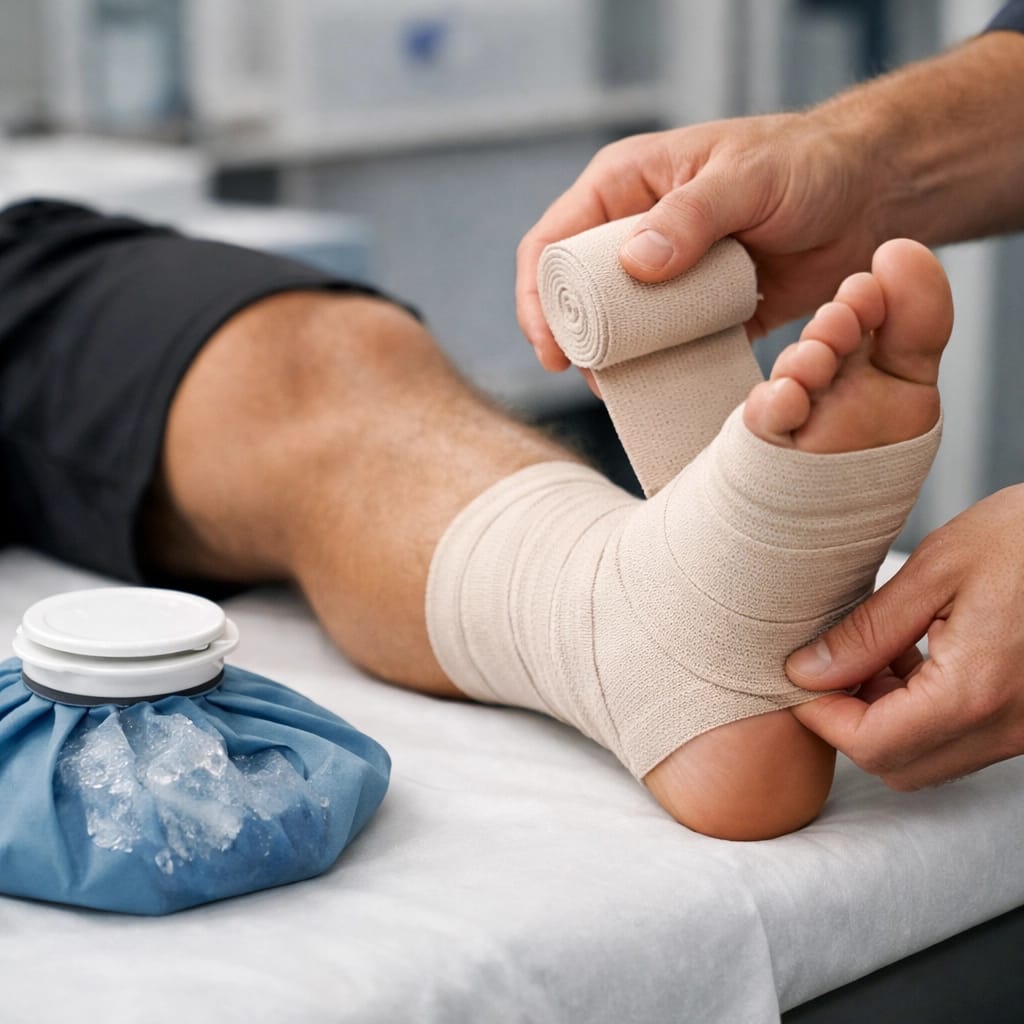
Compression – Wrap the area with an elastic bandage to minimize swelling. Make sure it's snug but not cutting off circulation.
Elevation – Keep the injured area above heart level when possible to reduce blood pooling and inflammation.
Here's what most people get wrong: they ice once or twice and call it good. Consistency during these first 24-48 hours is critical for controlling the inflammatory response. Set reminders on your phone if you need to.
Days 1-3: Get a Professional Assessment (This Is Non-Negotiable)
You might be tempted to wait and see if it gets better on its own. That's mistake number one. Schedule an appointment with a sports medicine specialist or chiropractor as soon as possible: ideally within the first few days of injury.
Why the urgency? Because proper diagnosis determines everything that follows. Without knowing exactly what's injured and to what degree, you're just guessing at treatment. And guessing costs you time.
During your initial assessment, expect a comprehensive evaluation that includes:
- Your injury history – What happened, when, and what you felt
- Physical examination – Range of motion tests, palpation, strength assessments
- Movement pattern analysis – How you move and where compensations might be occurring
- Functional testing – Sport-specific movements to identify limitations
At Dynamic Spine and Performance Center, we take this assessment phase seriously because it shapes your entire sports injury rehabilitation plan. We're looking not just at the immediate injury, but at the underlying biomechanical issues that might have contributed to it in the first place.

Week 1: Understanding Your Diagnosis and Timeline
Once you have a clear diagnosis, you need two things: a realistic recovery timeline and a structured treatment plan.
Your timeline depends on several factors:
- The type and severity of injury
- Your age and overall health
- Your fitness level before the injury
- How quickly you started appropriate treatment
- Your adherence to the rehab protocol
Be honest with yourself about these factors. A 20-year-old college athlete will heal differently than a 45-year-old weekend warrior, and that's okay. What matters is having realistic expectations.
Your treatment plan should be personalized to your specific injury, goals, and sport. A runner with a hamstring strain needs different interventions than a baseball player with a rotator cuff issue. This is where non-invasive pain management techniques become crucial.
The Treatment Phase: What Actually Works
During the acute phase (roughly the first 1-2 weeks), your treatment focuses on controlling pain and inflammation while protecting the injured tissue. This might include:
Manual therapy techniques – Hands-on treatment to improve tissue quality and joint mobility without aggravating the injury. Chiropractic adjustments can be particularly effective for joint-related injuries.
Controlled movement – Contrary to old-school thinking, complete immobilization isn't always best. Gentle, pain-free movement promotes blood flow and prevents stiffness. Your practitioner will guide you on what's safe.
Modalities for pain management – Electrical stimulation, cold laser therapy, or specialized techniques like ARP Wave Therapy can accelerate healing and manage pain without relying heavily on medication.

As inflammation decreases, usually around week 2-3, treatment shifts toward restoring full function:
Progressive loading – Gradually reintroducing stress to the injured tissue in a controlled manner
Corrective exercises – Addressing any weakness or imbalance that contributed to the injury
Sport-specific training – Rebuilding the exact movement patterns you need for your activity
The key word here is "progressive." Trying to do too much too soon is the fastest way to re-injury or developing chronic issues.
Common Mistakes That Add Weeks to Your Recovery
Let's talk about what derails most sports injury rehabilitation plans:
Waiting too long to get help – Every day you delay professional assessment is a day of potential ongoing damage and improper healing. That "wait and see" approach rarely pays off.
Inconsistent treatment – Missing appointments or skipping your home exercises because you're "feeling better" is a recipe for setback. Trust the process even when symptoms improve.
Ignoring pain signals – Some discomfort during rehab is normal. Sharp pain, increasing pain, or pain that persists after activity is your body telling you to back off.
Comparing your timeline to others – Your teammate might have "bounced back in two weeks" from a similar injury. That's great for them. Focus on your own recovery, not someone else's highlight reel.
Rushing back to full activity – Feeling 80% better doesn't mean you're ready for 100% intensity. The final 20% of healing is often where re-injury occurs if you're not patient.
Why Early Intervention Changes Everything
Here's the bottom line: the sooner you start appropriate treatment with a qualified professional, the shorter your overall recovery time. Research consistently shows that early intervention prevents:
- Chronic pain development
- Compensatory movement patterns that lead to secondary injuries
- Excessive scar tissue formation
- Loss of joint mobility and muscle strength
- Psychological barriers to returning to sport
Think of it this way: paying for professional assessment and treatment in week one might feel expensive or inconvenient. But it's far less expensive and inconvenient than dealing with a chronic problem six months from now that requires extensive rehabilitation: or worse, surgery.
At Dynamic Spine and Performance Center, we've seen countless athletes cut their recovery time in half simply by starting treatment in those critical first few days. Our comprehensive approach combines sports therapy techniques with personalized programming to not just heal your injury, but make you more resilient than before.
Your Action Plan Starts Now
If you're reading this with a fresh injury, here's your immediate checklist:
- Today: Implement RICE protocol consistently every 2-3 hours
- Within 24-48 hours: Schedule an appointment for professional assessment
- Week 1: Get your diagnosis, understand your timeline, and start your treatment plan
- Ongoing: Follow your program consistently, communicate with your provider, and adjust as needed
Sports injuries are frustrating, but they don't have to sideline you for months. With the right approach from day one, you can get back to doing what you love faster and stronger than you thought possible.
If you're dealing with a recent injury and want expert guidance on your recovery, schedule a consultation with our team. We'll assess exactly what's going on and create a personalized plan to get you back in action: the right way.
Ready to Move, Recover and Perform Better?
Schedule an individualized consultation with Dr. Stephen Ford at one of DSPC’s Greater Houston locations.
Book an Appointment