
Chiropractic, Dynamic Spine and Performance Center, Health, Life Style, Sport, Sports Injury, Wellness, ARP Wave Therapy, Equestrian, Sports Performance, Dry Needling, Houston, Katy, Texas
If you have spent any significant amount of time in the equestrian world, you have likely heard the whispers at the barn or the debates at the show ring about equine chiropractic care. Some call it a "miracle fix" for a cold-backed horse, while others dismiss it as mere "voodoo" that offers nothing more than a placebo effect for the owner.
The truth is far more scientific: and far more impactful for your horse’s career than most people realize. At Dynamic Spine and Performance Center, we see the equine body as a high-performance machine. Whether you are competing in Grand Prix dressage, barrel racing, or enjoying a Sunday trail ride, your horse’s performance is entirely dependent on its ability to move without restriction.
Here is the "secret" that high-level trainers and veterinarians are starting to embrace: Equine chiropractic care isn't just about fixing a "bone out of place." It is about optimizing the nervous system to unlock a level of performance that training alone cannot reach.
The Science of the "Secret": What Happens During an Adjustment?
One of the biggest misconceptions in animal and equine chiropractic is that the practitioner is "slamming" bones back into position. In reality, horses are incredibly sensitive creatures. An adjustment is a high-velocity, low-amplitude thrust directed at a specific joint: usually in the spine or pelvis: that has lost its normal range of motion.
When a joint becomes "stuck" or restricted (medically known as a subluxation), it does more than just cause stiffness. It interferes with the communication between the brain and the body.
The Neurological Connection
Think of the horse’s spinal cord as a high-speed fiber-optic cable. Every movement, every twitch of a muscle, and every response to a rider’s aid travels through this cable. When a segment of the spine is restricted, it creates "noise" on the line. The horse’s brain may not receive accurate information about where its feet are in space: a concept known as proprioception.
Research has shown that chiropractic adjustments stimulate mechanoreceptors. These are specialized sensors that respond to pressure and movement. By restoring motion to a restricted joint, we "reset" these sensors, allowing the horse to move with more precision and less effort.

15% More Flexibility: The Data Behind the Results
While many riders rely on "feel," the scientific community has been hard at work quantifying the benefits of equine chiropractic. If you want to know what the experts are seeing in the lab, the numbers are staggering:
- Improved Spinal Flexibility: Studies have documented a 15% improvement in spinal flexibility following chiropractic treatment. For a horse that needs to bend through a corner or round over a jump, 15% can be the difference between a clean round and a rail down.
- Vertical Movement: In research involving weekly spinal mobilization, horses experienced a 40% improvement in vertical movement after just three weeks of care. This is the "loft" or "suspension" that dressage riders and jumpers crave.
- Symptom Resolution: Surveys of horse owners indicate that 95% of horses showed significant symptom improvement within just two weeks of treatment.
These aren't just anecdotes; they are measurable biological changes. At Dynamic Spine and Performance Center, we focus on these animal chiropractic benefits to ensure your horse stays in the peak of its competitive life.
Why Your Horse Might Be "Faking" It
Horses are prey animals. Their evolutionary survival depended on their ability to hide pain. If a horse showed a limp in the wild, it became a target for predators. This "stoic" nature is still present in our modern equine partners.
By the time your horse is visibly lame, the issue has likely been brewing for months. This is where early warning signs of a sports injury become crucial for an owner to recognize.
Does your horse show these subtle signs?
- Pinned ears when girthing up: This is often a sign of thoracic or rib pain, not just "bad behavior."
- Difficulty picking up one lead: If your horse consistently struggles with the left lead, there may be a restriction in the sacroiliac (SI) joint or the lower lumbar spine.
- Tossing the head during transitions: This often indicates neck or "poll" discomfort.
- Unexplained "laziness": If a normally forward horse becomes sluggish, they may be protecting a sore back.
Experts often look at these as training issues. However, if the issue is structural, no amount of training will fix it. You cannot train your way out of a restricted joint.

The Hunter-Jumper Paradox: Perception vs. Reality
A fascinating study involving 38 hunter-jumper horses revealed a "secret" about how chiropractic affects performance. In the study, researchers measured stride length, rate, and symmetry. Interestingly, the chiropractic adjustments didn't significantly change the measured stride length.
However, the riders: who were not told which horses had been treated: reported a massive improvement in the "quality of work" for the treated horses. They felt the horses were more supple, more responsive to aids, and more "willing" to work.
This tells us that equine chiropractic isn't just about making a horse "longer" or "faster"; it’s about making them more functional. A horse that isn't fighting its own body is a horse that can focus on its rider’s instructions.
The Role of the Rider: The Missing Link
One "secret" that many equine specialists overlook is the person sitting in the saddle. A horse's spine is designed to carry weight, but it is highly sensitive to the balance of the rider. If you have a pelvic tilt, a frozen shoulder, or chronic back pain, your horse will compensate for your imbalance.
This creates a cycle of restriction. You get adjusted, but your horse is still stiff. Or your horse gets adjusted, but your crooked seat pulls them right back out of alignment.
This is why we advocate for a dual approach. At Dynamic Spine and Performance Center, Dr. Ford specializes in both human and equine biomechanics. By addressing the sports performance and chiropractic needs of the athlete (you) and the animal, we create a harmonious partnership.

Integrating Chiropractic into Your Program
Chiropractic care should not be a "last resort" for a lame horse. It is most effective when used as a preventative tool within a comprehensive sports injury therapy and rehab program.
How often should a horse be seen?
- High-Performance Horses: Every 4–6 weeks during the competition season to maintain range of motion and prevent micro-injuries from becoming career-ending issues.
- Pleasure Horses: 2–3 times a year to ensure general comfort and longevity.
- Post-Injury: Frequency depends on the specific common conditions treated, but often starts more frequently and tapers off as the horse stabilizes.
Before starting any treatment, it is important to understand the legal and professional requirements. Many states require a veterinary referral or specific animal chiropractic consent forms to ensure the safety and health of the animal.
Beyond the Adjustment: A Holistic Approach
While chiropractic adjustments are the core of our equine work, they are part of a larger puzzle. To truly unlock performance, we must look at the whole horse. This includes:
- Saddle Fit: A poorly fitting saddle is like a human runner trying to compete in shoes two sizes too small. It will undo a chiropractic adjustment in minutes.
- Nutrition: Proper inflammation management through diet supports joint health.
- Hoof Care: "No hoof, no horse." Imbalances in the feet lead to compensatory patterns in the spine.
- Advanced Modalities: Techniques like sports therapy techniques can complement adjustments by addressing the soft tissue around the joints.
Final Thoughts: Investing in Longevity
Your horse is an athlete, regardless of whether you are chasing a ribbon or a sunset. The "secret" to longevity and high-level performance isn't found in a bottle of supplements or a fancy piece of tack. It is found in the maintenance of the horse’s most vital system: the nervous system.
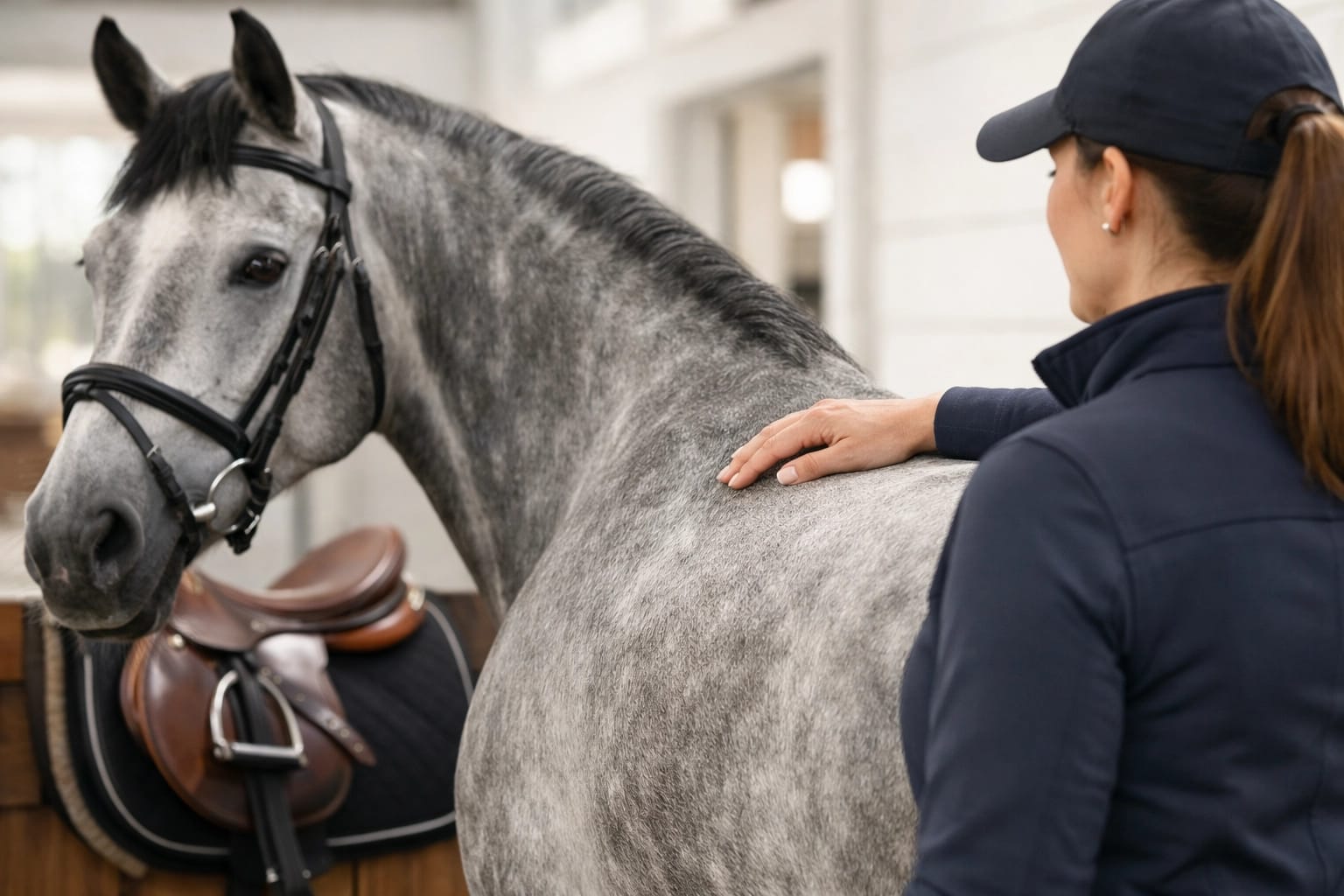
By restoring motion, reducing pain through endorphin release, and improving the communication between brain and body, equine chiropractic care allows your horse to reach its full potential.
If you are ready to see the difference a balanced spine can make for your horse, we invite you to explore our services and see how we can help you and your equine partner excel.
Ready to take the next step? Check out our FAQs or learn more about payment options and investment for your horse’s health. Let’s keep you and your horse moving forward, together.
Ready to Move, Recover and Perform Better?
Schedule an individualized consultation with Dr. Stephen Ford at one of DSPC’s Greater Houston locations.
Book an Appointment